
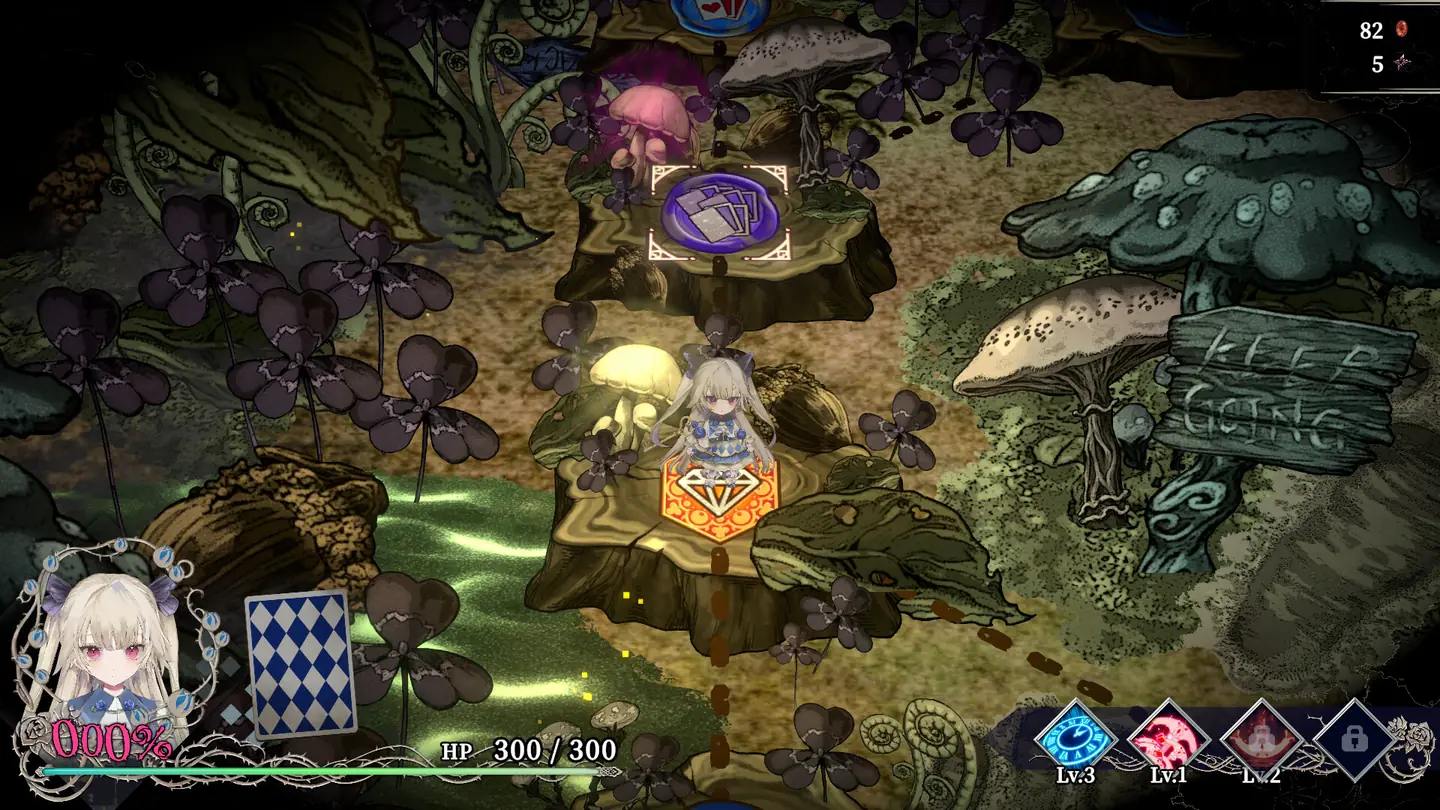
A CRYMELIGHT run is a chain of stages: clear one, pick one of three skill cards, and hold up to five cards to form a poker hand. Die and the hand is gone; the weapon upgrades you bought with sin are not. Three systems drive that loop — the cards, the Wonder Dimension and repentance — and everything else in the game is a consequence of them.
How a run works, start to finish
Alice enters Wonderland with no memory of her death. The White Rabbit names her, the Queen's army hunts her, and the only exit is a fight she cannot win on the first attempt. You fight through stages, take a card after each one, and go back to the beginning when you fall.
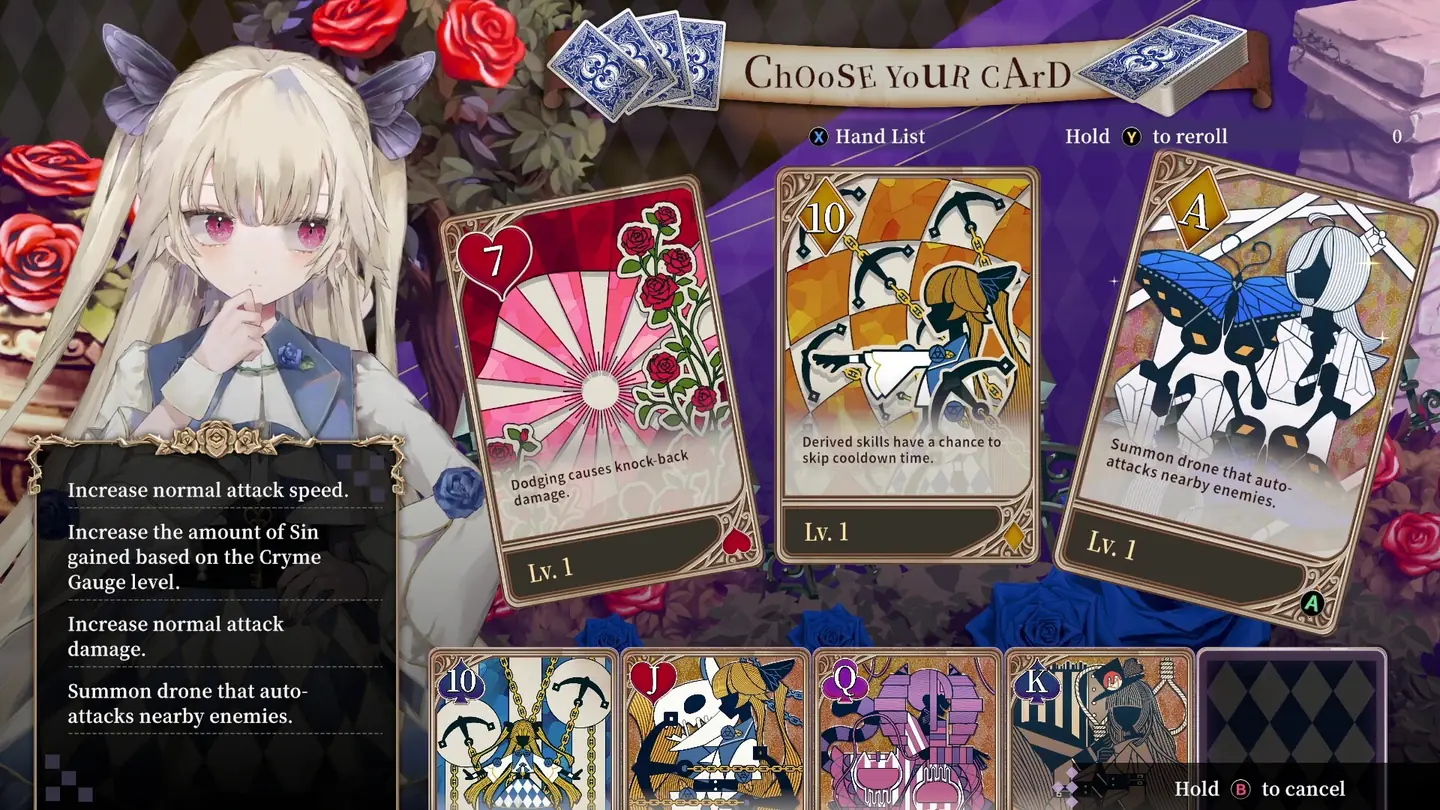
The card rule does most of the work. A card is not a permanent upgrade, so the question after every stage is not "which is strongest" but "which keeps the hand I am building alive long enough to matter". Holding five slots means every card you accept is a card you declined.
Poker System: five cards, one hand
Five cards form a poker hand, and the hand decides what your attacks do. A stronger combination produces a stronger effect, so the cards change the tactics available in a fight rather than simply raising a damage number. That is the difference between a build and a stat.
Two consequences follow, and both matter more than any individual card:
- Holding is a decision. With five slots, filling your hand with the strongest single cards can leave you with no combination at all.
- The hand is temporary. Losing the run takes the hand with it, so a build you cannot repeat is not yet an asset.
 Official media
Before you pick, look at what you already hold. A third card of the same rank is worth more than a better card that completes nothing, because the hand — not the card — is what the game reads.
Wonder Dimension: the floor you build
The moment an enemy dies, an indigo Wonder Dimension spreads across the field. As it expands, your abilities grow stronger and the pace of the fight increases. How fast it spreads and which abilities it amplifies are set by the skills you acquired, which is why the card choice and the floor are the same decision seen from two angles.
In practice, a fight you are winning gets faster and a fight you are losing does not. The dimension rewards finishing what you started, so spreading damage across several enemies is usually worse than removing one and letting the floor grow.
That also makes the first kill of a stage the most important one. If you open with the enemy you can actually kill rather than the one that hurts most, the rest of the stage runs at the higher speed.
Repentance: the only permanent progress
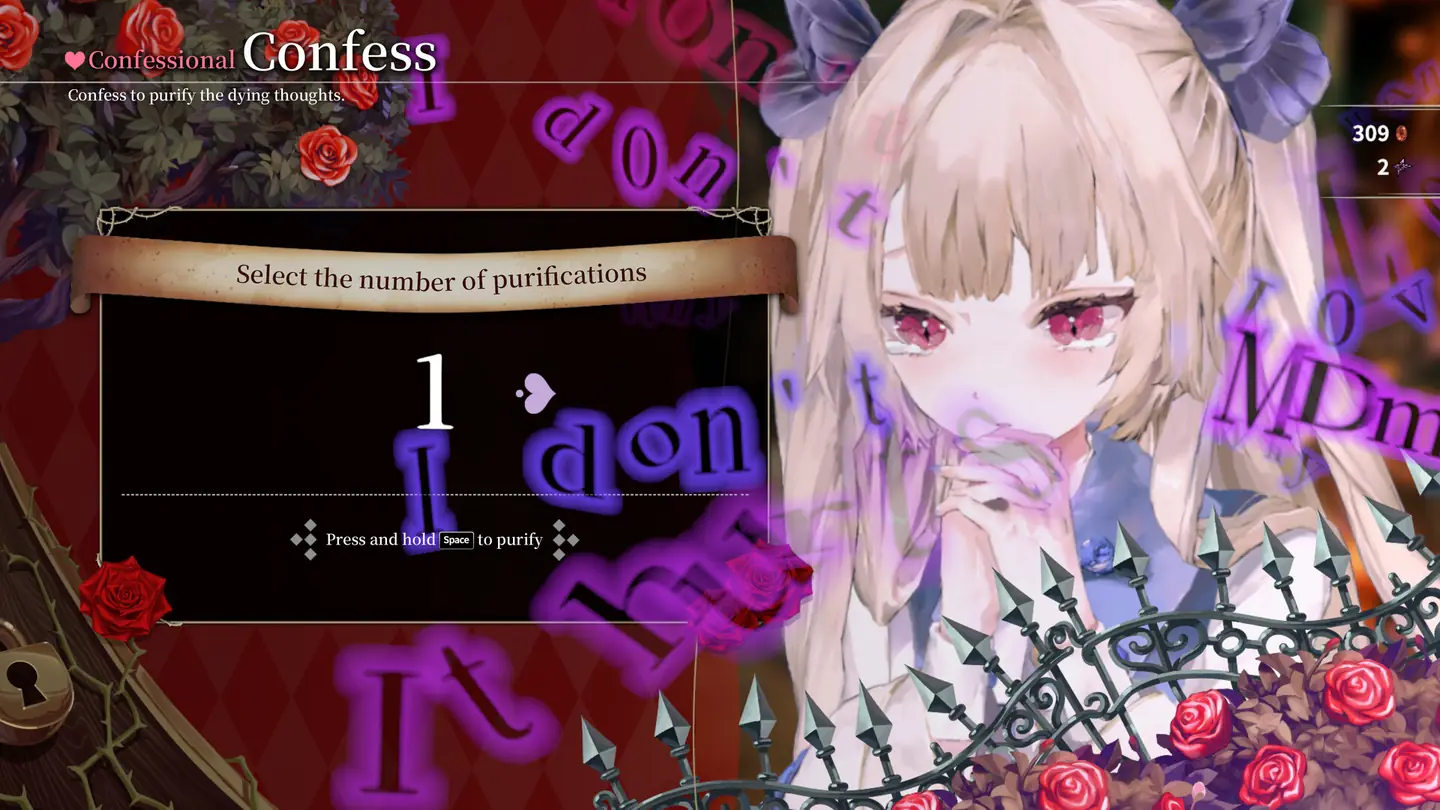
Alice carries the sins of the souls she defeats. Back at the Tea Party Hall she confesses them, and the tears of penitence become power-up items. Those items upgrade weapons and accessories, and that progress survives the rewind.
This is the answer to the game's central frustration. The cards reset and the hand resets, but the weapon does not, so a run that dies at stage four still leaves you stronger than the run before it. Spend sin before you spend cards, because only one of the two survives.
 Official media
The Tea Party Hall
The hub between attempts, and the only place where nothing is chasing you. Three things happen there: confession turns collected sin into upgrade material, the facilities spend that material on weapons and accessories, and the tea conversations carry the story the stages do not.
The conversations change every time you rewind. They cover the girls' pasts and sometimes reveal details about enemies you have already killed, which makes the hub worth walking through rather than skipping.
Difficulty and camera, before your first run
Difficulty is not locked. It can be changed at any time from the Tea Party Hall, so a stage that feels unfair is a settings change rather than a reason to restart the run. Players who find the default heavy should drop a tier and keep their cards.
Mode Select handles the camera. The close side-on view sells the art direction and makes dense fights harder to read; the wider top-down view is easier to parse when several enemies are on screen. Try both in the first stage, not in a boss fight.
First hour checklist
- Play the free demo if the systems are new to you — it covers chapter 1 with nothing at stake.
- Pick a hand early and commit. Two pair built on purpose beats five scattered cards every time.
- Spend sin before you spend cards, since weapon upgrades are the only thing a loss cannot take.
- Change difficulty from the hub rather than restarting; the option exists for exactly this.
- Talk to the cast between runs. The six girls each carry a different sin, and the tea conversations are where that gets explained.
What the demo will not teach you
Chapter 1 gives you enough stages to feel a hand come together, not enough to see one tested. Bosses that resist a specific combination, the late-game card pool and the point where five cards stop being enough all sit past the demo boundary.
That means the first retail hours are still a tutorial in disguise. Plan your first run as an experiment: pick a hand type deliberately, lose with it, and use the sin you collected to upgrade a weapon before the next attempt.