
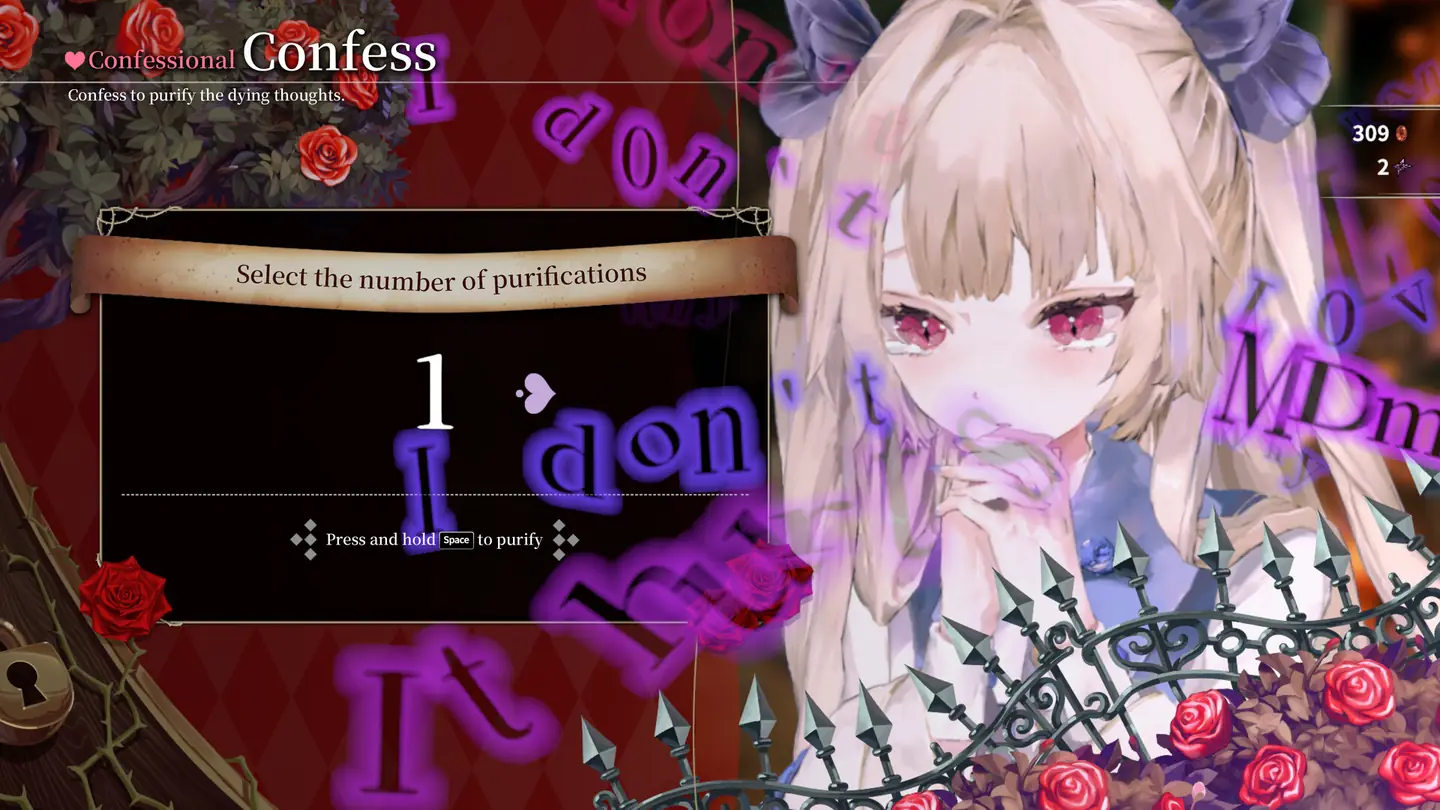
CRYMELIGHT runs three progression systems at once: cards inside a run, sin between runs, and gears that add options to every future run. Only the last two survive death. Cards are wiped when a run ends, which is the single fact that decides what to spend on first.
The order that follows is blunt. Unlock what is still locked, then raise the permanent numbers, then worry about the hand — because a hand you lose was never an investment.
Cards: the per-run track
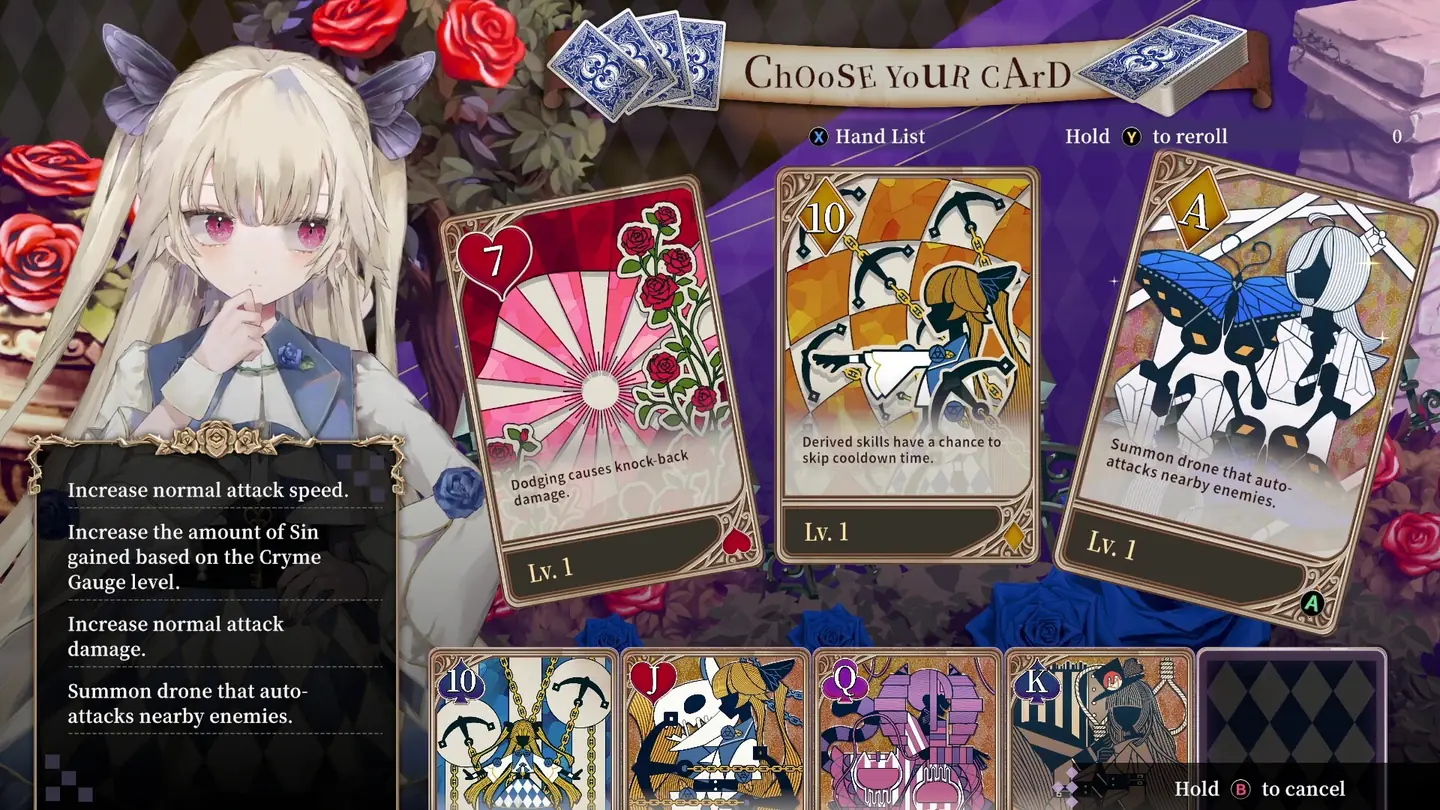
Every stage cleared offers three cards and you take one. Five cards make a hand, and the hand decides what your attacks do.
The ten hands are the standard poker ladder, and the official description is explicit that stronger combinations produce stronger effects. A completed hand raises the effect level of every card in it, which is why five weak cards that form something beat five strong cards that form nothing.
The ten hands, in the order they matter
| Hand | What makes it | Realistic |
|---|---|---|
| Royal flush | 10, J, Q, K, A of one suit | No |
| Straight flush | Five consecutive ranks, one suit | Low |
| Four of a kind | Four cards of one rank | Low |
| Full house | Three of a kind plus a pair | Medium |
| Flush | Five cards of one suit | Medium |
| Straight | Five consecutive ranks, any suit | Low |
| Three of a kind | Three cards of one rank | High |
| Two pair | Two pairs | High |
| One pair | A single pair | Highest |
| High card | Nothing | — |
The top four collapse if one card is missing. The bottom three complete partway, so the hand keeps improving while you are still building it.
Three families, pick one early
Matching ranks — pair into two pair into three of a kind into full house into four of a kind. Each extra card of the same rank promotes the hand, and it scores from the second card. This is the stable family.
Matching suits — flush. Rank does not matter, but four cards of a suit do nothing at all. You carry a dead hand until the fifth arrives.
Matching sequence — straight. Five consecutive ranks, and one gap makes the whole thing worth nothing.
Straight flush and royal flush need a family and a sequence at the same time. Without stacked rerolls they are not something you aim at.
Five slots, so every card is a cut
The hand holds five cards permanently, which means adding a card is the same act as discarding one. Five individually strong cards can complete nothing, and while nothing is formed a strong card and a weak card are worth the same.
The practical version: do not cut the weakest card, cut the hand that will not complete. If you are chasing a flush, give up on ranks entirely.
Rerolls are the lever that turns a wish into a plan. The screen offers three and you take one; rerolls redraw the offer, and more rerolls means a higher completion rate. A hand that never completes only leaves you with tougher enemies.
 Official media · Steam
Sin: the track that survives
Falling enemies leave Alice carrying their sin. Back at the base you confess it, sublimate it, and spend what comes out on weapons, accessories and the stats that do not reset.
This is the only growth that survives a lost run. The rule that follows: spend sin before you spend cards. Cards may not survive the next run; sin does. When you cannot decide where something goes, put it into sin.
Why the numbers compound
A run has a second clock besides the hand — the Wonder Dimension. Killing an enemy spreads an indigo field, and inside it Alice hits harder and moves faster. Acquired skills decide how quickly the field expands and what it strengthens.
That turns a permanent upgrade from a flat bonus into a rate. Anything that raises damage also shortens the time it takes to fill the field, which raises damage again. The compounding is why the first investments feel weak and the tenth feels disproportionate.
It also sets a floor on what is worth buying. An upgrade that improves something you rarely do — a heavy attack you have not unlocked, a resource you do not spend — stays flat no matter how often it is raised, because it never touches the loop that feeds the dimension.
What to raise, in order
| Order | Stat | Why |
|---|---|---|
| 1 | Revives | A death wipes the whole hand; one revive is one hand back |
| 2 | Whatever ended the last run | Buy the upgrade you already noticed missing |
| 3 | Attack | Feeds the dimension, which feeds everything else |
| 4 | Accessory slots | Compounding, but only once there are accessories worth carrying |
Resist buying ahead of the problem. A stat raised for a situation that has not happened yet is sin spent on a hypothesis, and sin cannot be re-earned inside the same run.
Gears: the clock room
The clock room spends gears to add things to the run itself, rather than raising a number. Where the confessional improves what Alice does, the clock room changes what a run contains: new map tiles, new rewards, a shop that did not exist before.
Card draws are luck. What you unlock here keeps working on the runs where the luck does not show up.
| Order | Unlock | What changes |
|---|---|---|
| 1 | Healing tiles on the map | HP recovery that does not depend on a draw |
| 2 | Special attacks as stage rewards | A button that exists in boss fights |
| 3 | Sell cards at the shop | Dead cards leave the hand, so a rank can complete |
| 4 | Sell derived skills at the shop | Leftover cards become a resource |
| 5 | Trading | Swap what you found for what you need |
Healing tiles come first because there is almost no other way to recover HP: you heal when you draw a card that heals, or when you stop on a tile. A card you did not draw cannot help you, and running out of HP before the boss is the cheapest loss to eliminate.
Special attacks come second for the same reason — do not hope to pick one up, put it on the reward table. A special attack ignores how armoured the enemy is, which matters most exactly where you need it most.
The shop comes third because the hand is fixed at five. Selling one dead card is the same as making room for the rank you are chasing, and it is the only way to empty a slot without waiting for the right draw.
 Official media · Steam
The order of operations
Nothing in the clock room or the confessional makes you stronger the moment you unlock it — both pay out on the next run. So treat the early runs as runs you are spending to unlock rather than runs you are trying to win.
When sin for the confessional competes with gears for the clock room, unlock first if anything is still locked. Numbers can always be raised later; an unlock that has not happened does not exist.
Once nothing is locked, the split is simple: sin into whatever ended the last run, gears into the next thing that adds a choice. Cards stay where they belong — inside the run, spent freely, and lost without regret.